
It hasn’t been two years since my last entry! I’m legitimately proud of myself! ヽ(・∀・)ノ
Sooo… I’ve been thinking about designing a tabletop RPG. Yes, yes, I know I have too many things on my plate and it’s a crazy notion, but it’s also something I’ve wanted to do for ages. I’ve been playing games like D&D and Pathfinder for decades now. Like so many others who have dipped their toes into this hobby before, I’ve had wistful thoughts of, “Hmm… it might be really fun to play something like that!”
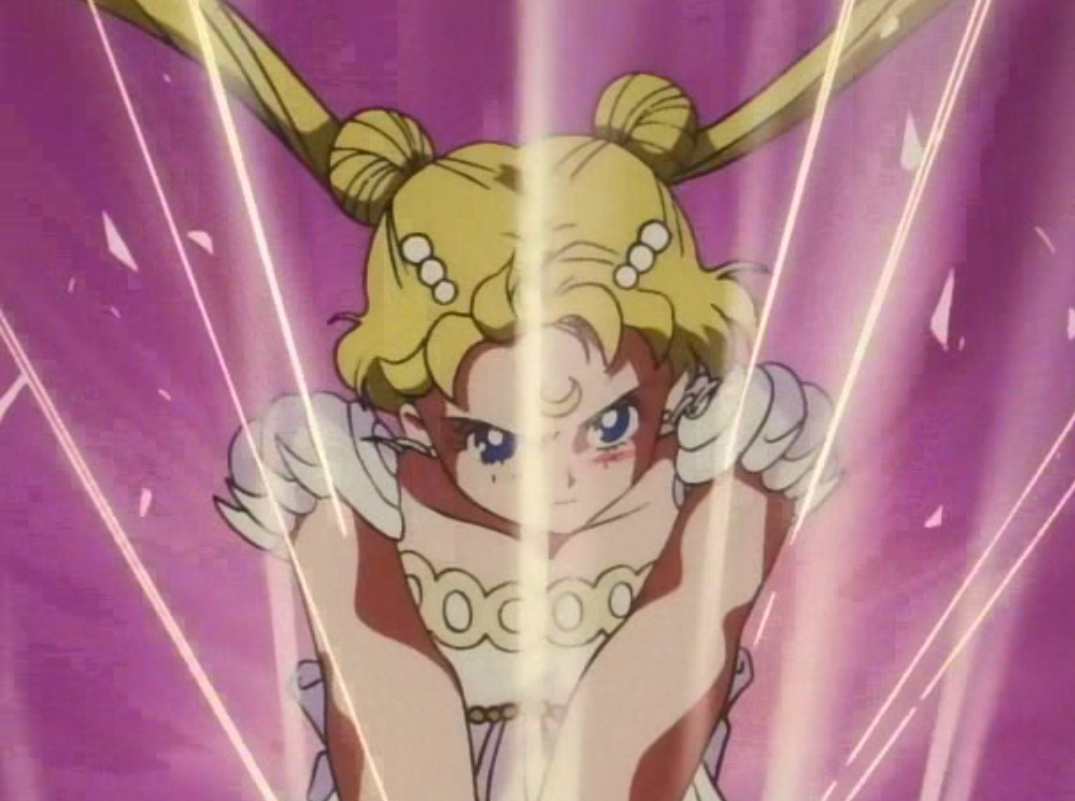
We paused our Starfinder game recently because the GM wanted a break (which is fair, since we always make him DM and sometimes you need to mix it up). While my tabletop group mulled over our next game, I fielded an idea I had been turning over in my brainsponge. Earlier this year, I started re-watching the original 1990s Sailor Moon anime. I’d never actually seen all of it before — let alone the entire series in its original Japanese with English subtitles. More than once, I’ve found myself thinking, “Wow, it would be really cool to play a magical girl TTRPG!”
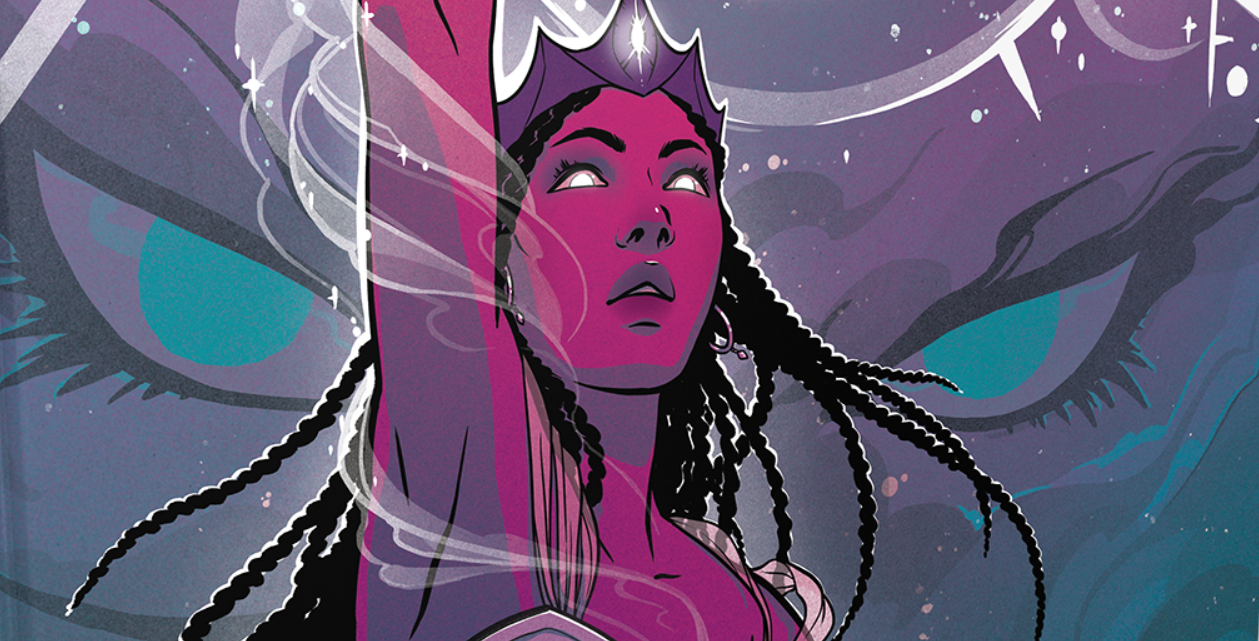
It turns out that a bunch of those games already exist — tabletop RPGs with distinctive Magical Girl roots like Magi-Knights, Girl by Moonlight, and Alchemistresses. There was even an old Sailor Moon RPG published in 1999 (that sort of seems more like an anime guide with some RPG rules tacked onto it). Many of these looked really cool and creative, but none of them was quite the vibe I was looking for.
That’s when I had the harebrained scheme to try to build my OWN TTRPG (which is… a choice) and I figured, why not talk about this on my blog?
How does one even go about creating a TTRPG? I guess the first thing to consider is what kind of game system are you going to use? We’ve come a long way from the D20 system (where you roll a 20-sided die and add modifiers to see if you pass a check). There are systems that use D6s or a percentile system (2 10-sided dice) and others like Exploding Dice (which I think is really cool and would love to play one day). If you’re interested in reading about some of the more recent popular systems, I would recommend checking out the TTRPG Mechanics Directory on StartPlaying. It came up when I started searching around and it was cool to see how many different game systems have cropped up over the years. My play pool is admittedly small (I have the most experience with D&D (3.5 and 5th Edition) and Pathfinder/Starfinder) so I will definitely need to poke around to find a system that would mesh well with my concept.
Well, what IS my concept? How does one begin to adapt something abstract like Magical Girls into a tabletop setting? Many years ago, I’d started work on a Persona-themed tabletop RPG with a friend. Adapting a video game seems so much easier than an anime; a lot of the existing video game content transfers over pretty well out of the box. Things like Persona and Final Fantasy have standard concepts like summons, spells, and a kind of class/character progression already baked into the core systems of the game. An anime like Sailor Moon or Cardcaptor Sakura is more of a feeling and concept; either you’re making a 1 to 1 representation of the content or you need to craft something that represents the spirit of the genre. Instead of strict rules and gameplay paths, it ends up looking more like you either:
- Create your own original idea with roots in Magical Girl themes and create mechanics around that set world
- Create a vague collection of suggestions and loose systems that would require more creativity from the GM
It kind of makes me think of Kids on Brooms. When I read the rulebook, it felt less like an actual ruleset and more like an idea book on how one MIGHT run a game set at a magic school. I don’t mind that at all, but I think it also depends on your players and how you want the game to feel and play.
This often boils down to the balance of Roleplay vs Combat/Encounters. How much do you want chance and skill checks to govern interactions within the game world? Depending on the setting, the content you’re adapting, and the players you’re aiming for, that balance can look VERY different. Some games are very vibe-based where as long as you can describe what you want to do sufficiently and the GM can make it work for the situation, the world is your oyster. I’m kind of reminded of Mothership: though there are some rolls and skill mechanics, I often felt like the success or failure of the character depends on the creativity of the individual playing that character. For example, you don’t roll to tell a joke. You say you want to tell a joke, the GM gives you an idea of the consequences if that joke doesn’t land, and then the player needs to actually TELL a joke to proceed. There is no roll to see “iz joke gud”; YOU, the PLAYER must come up with a joke and have it be good enough to pass the encounter.
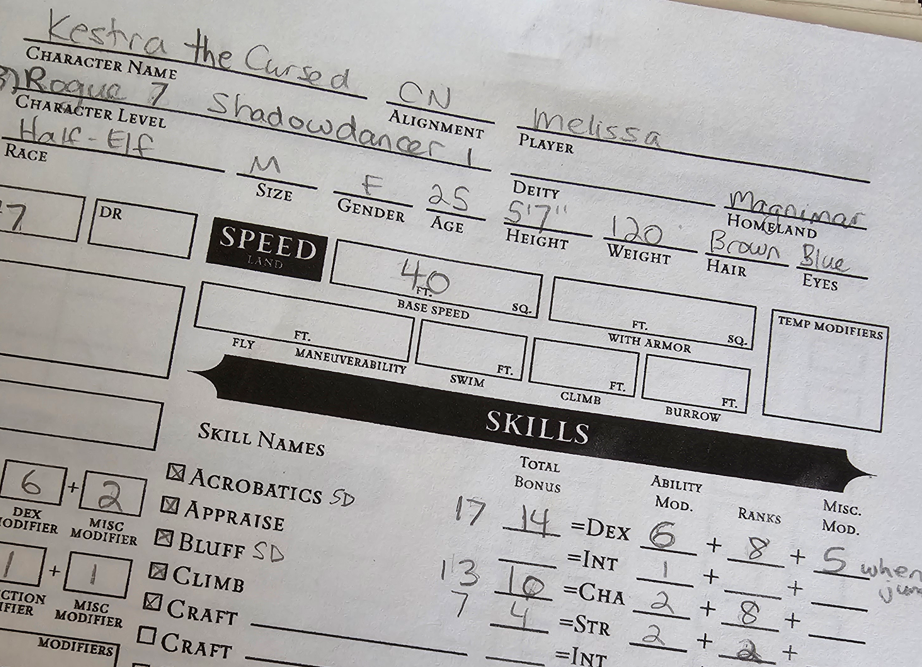
That sort of playstyle can be really intimidating. I know a bunch of folks who play TTRPGs that always worry that they’re not “creative enough” to roleplay effectively. I like roleplaying, but I also like encounters with stakes, where a roll can make or break your success. I have fun making characters (even ones that I’ll never play) and the more numbered systems in place (attributes, skills, proficiencies) the more I can lean into or break away from a character concept. Maybe I want to play someone with NO charisma who THINKS they’re really charming. I want the systems of the game to support my experience instead of the onus of success resting on my level of creativity that day. This allows hilarious characters like Sir Bearington to arise or some sort of fighter that cosplays a mage and thinks MP stands for “muscle points”. These sort of roleplay situations can play out without rulesets, but when there are rules and systems in place they give you buckets to play in and against, which can be helpful to people who struggle with creativity. When the possibilities are endless, what one player views as freedom can feel like an abyss of options and create choice paralysis in another player.
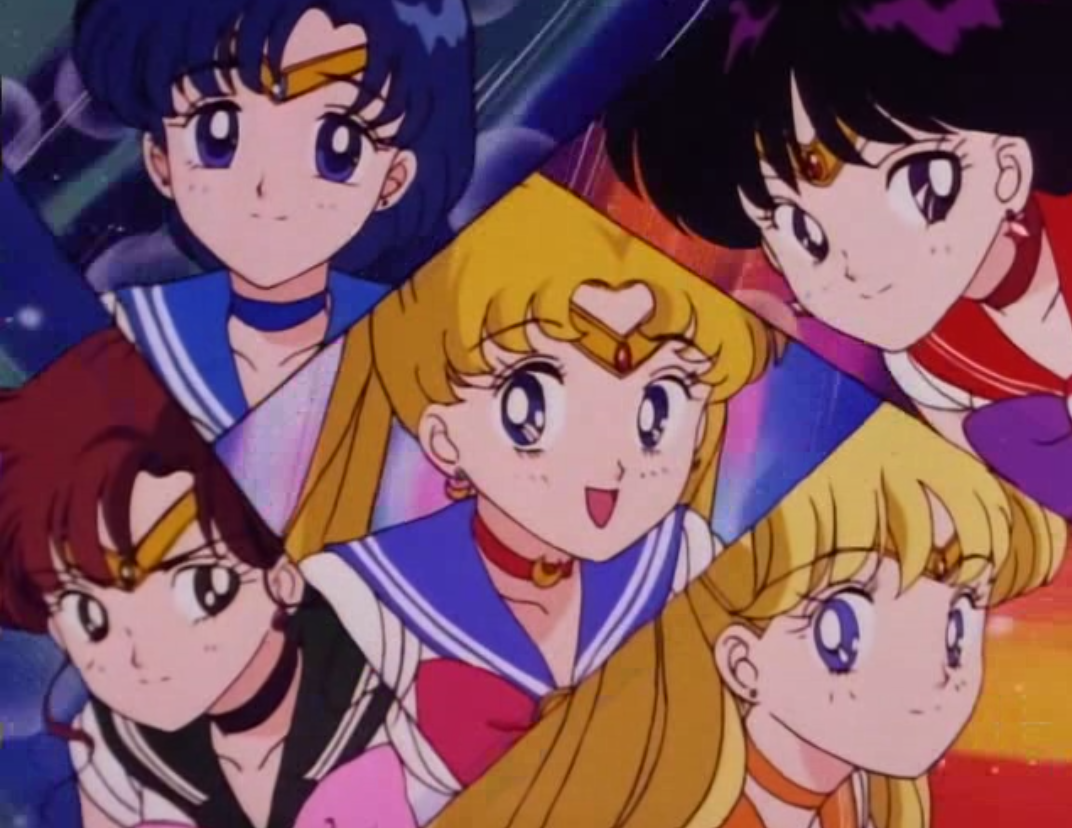
All this to say — how the hell was I going to build a Sailor Moon RPG I actually wanted to PLAY? If I were to make a 1 to 1 representation of Sailor Moon, it has much different pacing than a turn-based video game and leans more heavily into roleplaying/story-driven scenes. The Sailor Senshi only get a handful of attacks throughout the series (for example, Sailor Jupiter has Supreme Thunder for all of season 1). Not only that, but I would say pretty much all of the Senshi are casters with their abilities: a lot of attacks (if not ALL?) are at range — even Sailor Uranus who has a SWORD uses it for a range attack (Space Sword Blaster from the SuperS movie). This also brings up the issue of how do you differentiate characters and their builds from each other? You would need to start getting creative. Maybe abilities are elemental-based and some are more offensive or defensive and you can build templates around that. Air powers could infuse speed, earth could give you bark or stone skin, etc.
It’s not completely hopeless, though. Sailor Moon and other Magical Girl anime have some great concepts that would translate well into TTRPGs:
- Due to the specific anime episodic formula, Sailor Moon is a good template for a campaign in the guise of an “arc”. There is a heavy focus on a monster of the week, which tends to be controlled by a henchman who then leads to a Big Bad and the culmination of said arc.
- Continuing with the “monster of the week”, this gives us a built-in character focus with each “episode” as the monsters could be representative of some facet of the player characters’ current struggles.
- Sailor Moon and other anime like it tend to have a guide character, which could easily serve as a vessel for the GM to relay important information to the players. Even some RPG video games with silent protagonists have these characters, such as Gallica in Metaphor: ReFantazio or Morgana in Persona 5.
- A group of Sailor Senshi is a de facto party of adventurers itself. There is no struggle to get the PCs to stay together as they are already united in purpose. There is also some built-in conflict as to which character is the leader of said group and that could be something the henchmen/Big Bad plays into to sow discord within the party.
- Secret identity mechanics: the party must keep their civilian identities secret lest the enemies sleuth out who they are and use this information against the players.
The tabletop RPG you make needs to capture the essence of the content you’re adapting and a lot of Sailor Moon fights are vibe-based. The more I think about it, the more I realise that I might just not have enough experience with game systems that employ RP-focused fight systems at this point. Maybe at this time I CAN’T adapt a Sailor Moon TTRPG experience I would enjoy playing.
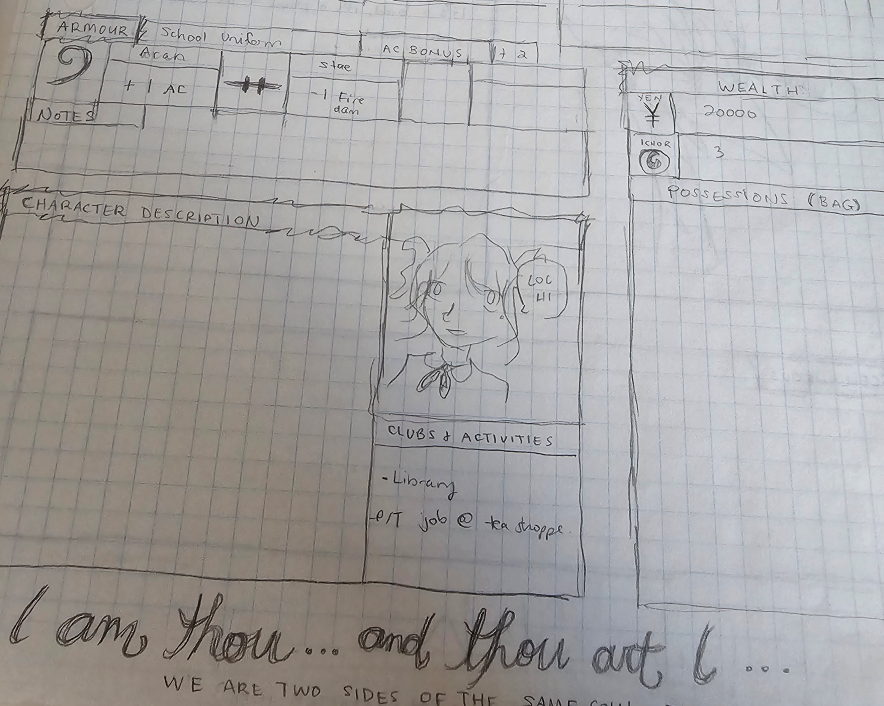
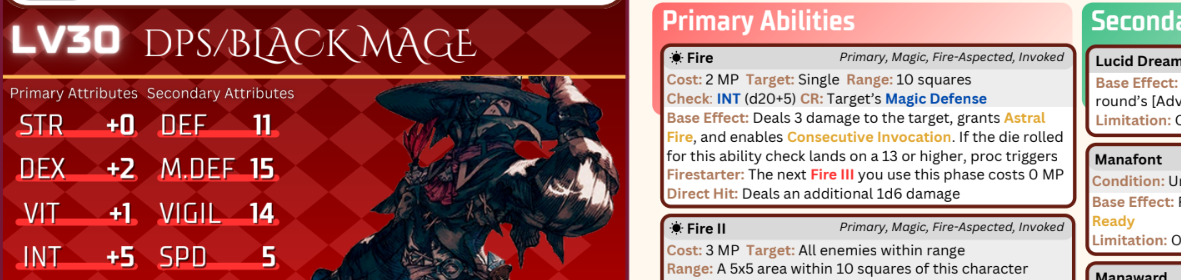
Where does this leave me? This is going to sound absolutely absurd but… it got me excited about my old Persona RPG again. While I was writing this post, I went digging through my old planning materials, thinking I might use some of what I had as images for the post. A quick skim turned into hours spent sifting through the information and being struck with NEW IDEAS! Maybe I can’t make a Sailor Moon TTRPG I would like to play, but I think I might be able to make a Persona TTRPG I would like to play. I’d originally envisioned it as a D20 system, but I think some of the ideas I have might be better suited for a custom system built heavily upon Powered by the Apocalypse (which I’ve admittedly never played). This is completely a tertiary project that I barely have any time for, but it’s something I’m excited about nonetheless! Maybe one day I’ll have more to share with you guys.
Anyone else have experience creating tabletop systems or making game modules for existing properties? I’d love to hear about your journeys in the comments!
Subscribe to the blog to receive updates on new content and comment on posts. Neato! ゚*。(・∀・)゚*。
Comments